Friday, October 19, 2012

Errors to Stay Aware Of In Huge SMS

   As the company market becomes more competitive, investors and entrepreneurs are looking for new methods to reach out to clients. Moreover with globalization being the concept of the age, every product wants to show up at out to broader range of clients to be able to enhance their sales traffic better. To experience the key benefits of promotion and promotion, mobile is the newest system that is increasing in reputation with its SMS support. The concept of huge SMS has effectively taken the stylish of people that makes it much easier and flexible for traders to keep in touch with clients.

Though there is no question about the key benefits of huge SMS, it is in the same way actual that this technology needs to be used effectively to be able to attract the attention of clients. However, most generally it is seen that many traders practice common errors which results the impact of huge SMS promotion badly. Before you also begin acquiring the support of huge SMS, it is suggested that you remain suggested about the mistakes to prevent in big amounts SMS promotion to be able to get maximum possible benefits:

Insufficient contact to action: The first mistake that most traders do is that they are unsuccessful to impact the clients with a appropriate practical technique. If your concept does not click well with leads, they will not feel any desire to consider it. Hence, when creating promotion concept for big SMS, make sure that it's attractive and immediate with a minimal stick.

Do not try to power customers: Getting hold of numerous mobile numbers is no challenging process. However the key is to get started with the technique with acceptance from clients. Instead of acquiring amounts of mobile customers and delivering them with details, it is better to keep your present clients customized and suggested for better relationships. In most cases it is seen that traders forward promotion concept in big amounts to huge list of numbers. However they are unsuccessful to get appropriate response in come back as either their concept gets regarded as scammers or gets eliminated without developing any impact among people.

Frequent before message: The third mistake that is normally devoted by traders is that they keep delivering clients with too many details at regular interval. It has been observed that regular promotion details usually get people to frustrated and disinterested, thus developing your promotion projects a unable. Hence it is suggested that you keep your clients customized about activities, services and offers at appropriate interval so that it appeals to their attention in an immediate.

Maintain a appropriate time: It's actual that giant SMS support allows you to deliver details whenever they want of the day. Financial on this fact, many traders forward promotion details at odd hours such as day or evening. Such details mostly do not get enough attention from clients as they end up as junk in the mail box.

jeyateshop

jeyateshop

Friday, August 10, 2012

Seven Productivity Tools That Can Make You Better at Public Relations

In public relations, workflow is everything. Here are seven (plus a sneaky eight at the end) tools that I use on a daily basis that could help you to stay organized and even do more than would otherwise be possible.


One caveat, these tools are largely for people using Gmail. If you use another email platform, like Outlook, you can check out these add ons. If you are on a Mac, you should also check out the tools my friend Michael Schechter uses.


Also, two of the recommended tools, Asana and Diigo, are platform agnostic.


Go Professional with Gmail


Google Apps


image

If you are using GMail you should consider paying the $50 per year, per user and getting Google Apps. This will allow your calendar to work with your branded email seemlessly and has some other benefits, like letting your team share calendars and scheduling, much like Outlooks allows in team environments, but for much less than an Outlook server. You can read the Small Business Guide to Google Apps to get you started.


Write that Name

image


Write That Name is a French startup which updates your Google Contacts. I used to spend 15 or more minutes a week doing what Write That Name does automagically. This saves me 13 hours a year at least. There is a free version to update 20 contacts a month, I pay $23 per year to get unlimited service and have some control over the account. I also love that the CEO Phillipe Laval is so responsive on Twitter @writethatname


Getting Organized


ActiveInbox

image

The basic ActiveInbox package is free, but I pay the $24.95 per year because it is just that good.  It is a Gmail addon that can be use in Chrome and Firefox. It lets you organize your tasks and project folders in Gmail to and do simple CRM. You can also use it to get a zero inbox and use the GTD system, for those who are into it. I am not even close to completely utilizing the power of this app yet.


Asana

image

Asana is one of the most talked about startups of last year with an all-star team, including co-founder of Facebook Dustin Moskovitz. This is great if you are working on tasks with a team, or even on your own. You can set up workspaces and then projects inside of those workspaces and finally add tasks to those projects. You can assign different people to each task and get email reminders of what is due and when. Everyone on the project can assign tasks. You can read an in-depth review on Lifehacker here. Asana is free for teams up to 30 members and then pricing starts at $100/month and goes up from there.


Engagement and Outreach


Rapportive for Gmail and Google Apps

image

Rapportive connects your email interactions with your social networks. When an email comes in, it allows you to follow that person on Twitter, friend them on Facebook, request to connect on LinkedIn and numerous other channels. Everything that the email connects with shows up in the right sidebar. I have used this to connect with new clients, prospects and just new friends. It is invaluable to give me the info I need about each new (and sometimes old) contact.


ToutApp

image

ToutApp advertises itself as a great app for sales, and I can see how it would be very useful for that. But it is also a really useful application for PR work. You can keep track of email pitches through its easy to use interface, and you can put together templates to use for all kinds of correspondence. Because it is a one to one email sent directly from my email address, and because each email can be customized, it doesn’t feel spammy. Also, it ensures all the formatting stays the same. I have used it to pitch bloggers, organize speakers for events and many other uses. You can read some of the may ways you can use Tout on its help site. There is a free and paid version. The free version allows five emails per day and allows three templates. Bigger plans start at $30 per month.


Organizing my Brain


Diigo synched to Delicious


image

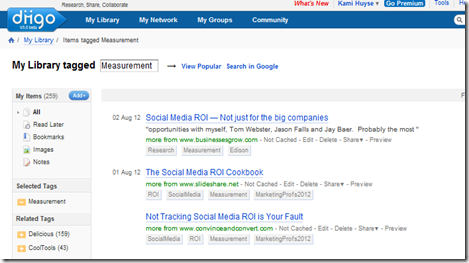
Working online makes one a voracious consumer of information. One way that you can categorize all the information you see every day and turn it into your own personalized library is by tagging your links and saving them. I have saved nearly 7,000 links since I started doing this on Delicious. More recently, I imported all of my links into Diigo, and I love this tool. It allow you to annotate a link on the fly, add sticky notes and make public or private lists that you can share with others, and which allow them to see the web pages in a handy slideshow format. Since each tag has its own RSS feed, you can use a service like TwitterFeed to send the content to other social networks based on the tag you give it (no unsightly hashtags needed). Better yet, you can still synch back to Delicious, so that your extensive library of links is always backed up.


Hope you find one or two of these tools useful to improve your productivity. As with any tools, consistency of use is the key. There have been many tools I have used and abandoned, but these tools have “stuck” for me. Which tools have you found invaluable?

Thursday, May 17, 2012

Social Media and Cause Marketing: How to Paint with a Tweet


MolsonM Facebook Banner


Cause marketing can be tricky.


You need to make sure the cause you are supporting aligns with your branding and that the two come together for a win-win. This is even more important if you are just one


Molson M, which is a craftsman version of Molson Beer brewed and sold in Canada, is conducting a cause marketing campaign that seems to get that balance right. Its massive Liquid Art campaign, which consists of outdoor advertising, video ads (see below) and a social media components, centers around the idea that beer making is an art, and like other art forms, it can be mastered.


“Every Medium Has Its Master”


Watch the video to get the gist of it, but of course they position Molson M as a master crafted beer.


MolsonM has agreed to donate $1 for every tweet that contains the hashtag #MolsonM_Art to the Canadian Art Foundation. They will donate up to $20K, according to their Twitter account. They also are painting a mural in Toronto at King and Church around a billboard of the Liquid Art creative. The mural contains all the Twitter handles of people who have Tweeted the hashtag.


Molson Mural from CAF


The campaign was launched from its @MolsonM Twitter account, which didn’t exist before the campaign but now has over 1K followers. The Molson M Facebook page has over 15K connections.


The benefits of this campaign is that it connects Molson M with a community interested in art which would resonate with the concept of craftsman beer. They may also come to learn that Molson M’s craftsman beer is very different from the mainstream Molson Coors products. By connecting the brand to the artisan sensibility it has the potential to work to build Molson M some real value. Moreover, by tying to a venerable and respected arts organization in Canada, each person who participants know that he or she has benefitted a worthy charitable organization.


The campaign will continue for a few more weeks (May 2012) and the mural will come down sometime at the end of June.


What do you think about campaigns like this that take advantage of advertising, PR, and social media while adding a cause marketing component? What works for you and what doesn’t?


Liquid Art

Wednesday, May 2, 2012

CoolTools: 4 Instagram Apps for Android and iPhone, too


Last month, Instagram, a photo sharing social network, finally added an Android app. A few days later, Facebook bought them for an incredible amount of money. Of course, I immediately went out to find some MORE apps to play with Instagram and do our jobs better, of course, Why have one app when you can get five?


Here are my favorites so far, along with some ideas about how to use each of them for business. What apps are you loving for Instagram, and do they work on Android yet?


Postagram


image


What if you could take a cool picture of that new person that you met at a conference then send it to them as a postcard for 99 cents? Isn’t that way cooler than just sending an email like this, “So glad to have met you, yada, yada, yada?” I am headed to Mom 2.0 this week and plan to try Postagram out. You don’t even need Intagram to use it, you can also send photos from the website as well. Smart idea.


Webstgram

image


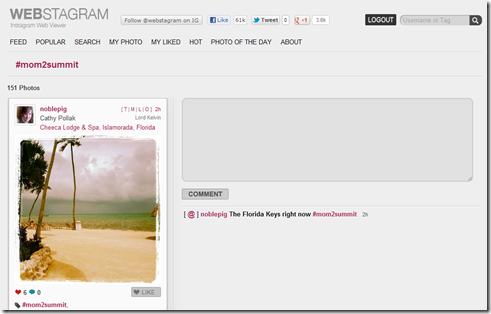
Search for hastagged photos using this search engine on Webstagram, you can also subscribe to the RSS feed for your searches in Google Reader, or whatever reader you use. To use it you have to login with your Instagram account


http://web.stagram.com/tag/webstgram/


Photo Grid

image


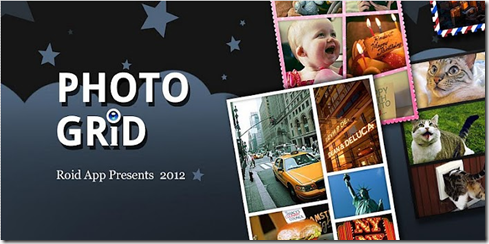
Photo Grid allows you to take 9 photos and rearrange them into a photo montage. It allows you tell the story of a moment in time and then share it to instagram, or anywhere else. It creates a Photo Grid folder in your camera application, and you can just pull from that folder in Instagram. I would classify this one eye candy, but you could use this photo to send make a photo to send as a Postagram to a group of people. From a brand perspective this could be a great way to make an impression, and you could include one photo with your logo or brand identity in it.


Personal Bonus: Lovestagram

image


So, what is the good of all business and no fun? Thought we would throw in Lovestagram, which allows you to send an e-card to the one you love. It allows you to use photos from Instagram. And this one has a fun back story. It was created by Kaitlyn Trigger, the girlfriend of Instagram’s co-founder Mike Krieger. She downloaded “Learn Python the Hard Way” to learn how to program and crated Lovestagram as a surprise for Krieger.

Monday, April 30, 2012

Machines are Doing More for Us Than Ever: But When is it Too Much?

Humanize


It is natural a to want to do more with less. Over the past few centuries we have relied more on machines to do a lot of our work for us. It was once thought that computers would help us do all of our work and we would sit by at our leisure and enjoy life. We are enterprising creatures, looking to get the most value out of the least amount of work.


It’s human nature.


As you know, that utopian world of non-working people and hard working machines hasn’t come to pass, but it won’t stop us from trying.


We Are Relying More on Systems


A couple of seemingly disconnected things have come together over the past few weeks to make me reimagine this world of machines anew.


First, I read Maddie Grant and Jamie Notter’s book Humanize, which made me consider how our companies have taken on the likeness of machines, and as such have lost some of their flexibility and adaptability.


Second, I heard about a new computer program that can write articles that are just as convincing, if a little less inspired, than human journalists. Read this article “Can an Algorithm Write a Better News Story Than a Human Reporter?”


Third, I attended the Social Media Analytics Summit, where one of the arguments were around the idea that automated sentiment analysis is flawed and businesses should not use it to make decisions. Here is a really great post that explains why automated sentiment analysis is not very accurate.


Fourth, I heard a segment on NPR that pointed out a new computer program that can grade student papers more accurately than the teachers. Good news for over busy teachers, but maybe not so good for creative thought. Check out the story, “Can A Computer Grade Essays As Well As A Human? Maybe Even Better, Study Says.”


Finally, I heard about an experiment using a robot nanny. From the article, “80 percent [of kids] thought the robot was intelligent, while 60 percent thought it had feelings….The children didn't believe that the robot had the right to be paid to work or vote in an election, and most felt that it was okay for it to be bought and sold.”


Taken separately, these things are just a great book, a concern about a type of analysis and interesting news stories. But in its totality, it got me to thinking about how we turn over more of our decision-making power to machines every year and how easy it has been for us (me included) to relinquish that power.


In our rush to increase productivity and get simple answers, we have reduced people down to single digit Klout scores, judged people by their avatar, and valued companies by their digital footprints.


The Digital Migration


The recent squabbles over the valuation of Facebook as it nears its IPO on one hand and the sale of Instagram for $1 billion US to Facebook show that our society has certainly moved online for good. Perhaps our collective move away from manufacturing and toward a service and knowledge-based economy have made this mass migration into the digital world inevitable.


After all, as humans we have been migrating since the start of time. Why should this be any different?


It seems that the sheer speed of this transition, more than any other in human history, is moving faster than we are adapting our laws, our social understanding or even our brains.


In an effort to “keep up” we turned over the mundane tasks to computers. This is all well in good, but now a “little” has turned into “a lot.” We regularly let machines determine what times are best to  tweet (Buffer), what words to use (Scribe SEO or Inbound Writer), or even what products to buy based on our values (Good Guide). Some of use use the Internet a little bit like we would an external brain (witness my Diigo account).


We are seeing the world through our own self-imposed , filtered glasses, but we forgot to take out the rose colored lenses.


The Trouble with Machines


Texting


There is so much good that comes with machines that it is hard to see the drawbacks, but here are six areas I think are impacted by machines. What are the drawbacks that you see?


  • Lack of Thoughtfulness. Sure a computer can consider many options, as long as they has been programmed into the system. A human is much better at processing information and seeing the subtlety.  Moreover, we think more critically than a machine can do.
  • Lack of adaptability. While it is true that neural networks can learn and “adapt” to new input, they can only consider the variables input into the system. What about information that is missing, body language and other clues for which it is very hard for a machine to understand or react.
  • Loss of Creativity. If we rely on machines to relay information, there is not the same room for the creative turn of phrase. And what about breaking the rules of grammar to make a point. Get my point? The use of machines to set the standard for writing sets the bar too low.
  • Autopilot Mistakes. When a system is on autopilot, even small deviations can eventually lead to huge accidents and unintended consequences. Machines can make recommendations and do the heavy lifting in a quicker time and with more accuracy than a human, but it isn’t as good at making decisions that require opinion.
  • Spam. With the ability for machines to write for humans more convincingly, it leaves the door wide open for more spam sites and email. If humans don’t even have to write the stuff it becomes even more prevalent.
  • Shallow Thinking. Some scientists and thinkers have hypothesized that our brains are being rewired to only have shallow thoughts. Even if you don’t completely buy that hypothesis (I don’t), it is true we have become a generation of skimmers. The sheer volume of information thrown at us every day necessitates it. More volume can only exacerbate the problem.

Monday, April 2, 2012

New Internet Dating Sites (PinPal, Girls Around Me, FaceMatch) Compromise Safety


Mashing up data from multiple social networks seem like a great idea, certainly for marketers and those of use in public relations. However, unintended consequences can crop up pretty quickly.


Please Rob Me was probably the first such application to cause widespread concern. Its aggregated check ins from Foursquare announced when a person just checked out of their house. The owners of the site were trying to make a point about over sharing.


More recently a crop of online dating and meetup “services” have been released that have given rise to concern about personal safety.


PinPal Collects Data and Makes a Match


PinPal Dating Site


The most recent one is called PinPal, which was launched over the weekend into Beta. Jimmy Addison, the founder of Pinpal, was aggressively promoting and defending the service from the Twitter account @pinpalwizard last night. The service mashes up your Pinterest, Facebook, and Twitter accounts, then looks up your Klout score to make potential matches.


Girls Around Me for Stalkers


girlsaroundme stalker app


Another service that recently made headlines as a potential safety hazard was the iPhone app, Girls Around Me. This service mashed up Foursquare checkins with Google maps and GPS to show you people who have checked in nearby your location. The app debuted in December and was downloaded 70,000 times before it was pulled from the app store after it lost its access to the Foursquare API. Its Russian developer, defended it in the Wall Street Journal, saying its “intention was simply to help people discover public venues nearby.”


FaceMatch Helps Make Love Connection


Facematch dating


When I attended SxSW, I noticed an app from a Japanese company called FaceMatch, that supposedly lets your signal to someone on Facebook that you would like to get to know them better. I am not sure how it works since its website it pretty vague. Perhaps it is like a superpoke, or it deposits one of those awful posts on your timeline to join FaceMatch.


What do you think about all of this? Are we overstepping our bounds with technology by putting creativity before concerns about safety.


Would love your take.


UPDATE: The Pinpal service was an elaborate April Foos Day joke, here is how and why we did it. However, Girls Around Me and Facematch are real services, as is the app Cupitino, which was brought to my attention by Brian Block. That service matches you with other Mac lovers. Here is how they describe the service:

Cupidtino is a beautiful new dating site created for fans of Apple products by fans of Apple products. Why? Diehard Mac & Apple fans often have a lot in common - personalities, creative professions, a similar sense of style and aesthetics, taste, and a love for technology.


We believe these are enough fundamental reasons for two people to meet and fall in love, and so we created the first Mac-inspired dating site to help you find other Machearts around you.